18 Nov 2026
Control Room Protocols Ensuring Seamless Multi-Region Live Gaming Experiences
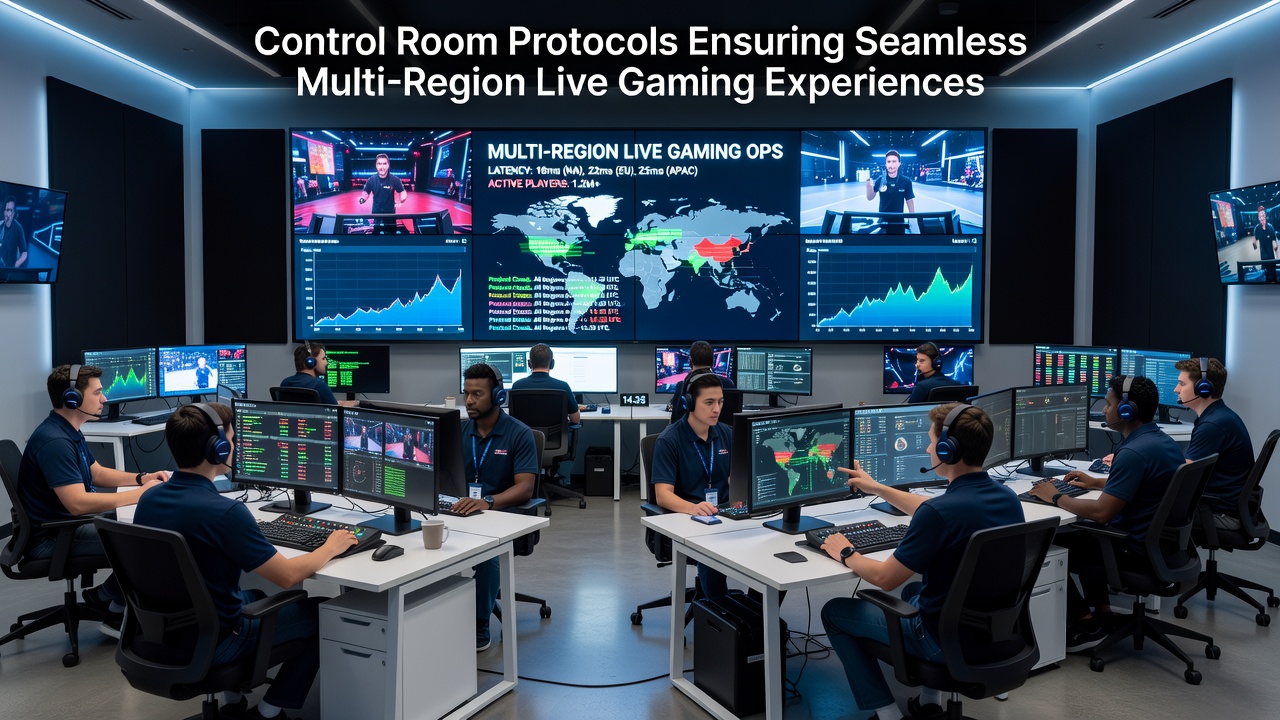
Control rooms serve as the operational hubs where technicians coordinate live gaming streams that span several time zones and regulatory jurisdictions at once. Teams monitor latency metrics, synchronize dealer actions across feeds, and adjust routing paths when network congestion appears in one region while another stays stable. Data from industry reports show that these facilities handle thousands of concurrent connections daily, with protocols dictating how staff escalate issues before they reach players.
Core Functions of Multi-Region Control Operations
Staff in these centers track video encoding standards, audio synchronization, and player interaction logs through unified dashboards that pull inputs from servers located in North America, Europe, and Asia. When a feed from one continent experiences packet loss, operators reroute traffic through backup nodes that maintain frame rates above set thresholds. Research from gaming technology institutes indicates that such rerouting occurs several times per hour during peak periods, yet players rarely notice interruptions because protocols require automatic failover within milliseconds.
Regulatory compliance adds another layer because each jurisdiction imposes distinct requirements for data retention and broadcast quality. Technicians cross-reference logs against rules from bodies like the Nevada Gaming Control Board and iGaming Ontario to confirm that every session meets local standards before archiving. This cross-checking process runs continuously, with automated alerts flagging any deviation that human reviewers then verify.
Handling Latency and Synchronization Across Continents
Geographic distance creates variable delays that protocols address through precise timestamping and buffer management. Engineers deploy algorithms that predict congestion patterns based on historical traffic data from major internet exchange points. When predictions indicate rising latency toward a specific region, control staff pre-emptively shift encoding priorities to preserve the core gaming experience for the majority of connected users.
November 2026 Protocol Updates
Industry observers note that several major operators plan to activate enhanced synchronization standards in November 2026, aligning with new hardware rollouts that reduce average end-to-end delay by measurable percentages. These updates build on existing frameworks rather than replace them, allowing gradual integration without service disruption. Figures from technology vendors reveal that early adopters already report fewer escalation tickets during cross-region events after testing the new parameters in controlled environments.
Quality Assurance and Incident Response Layers
Multiple verification stages run in parallel inside control rooms. One team watches raw feeds for visual artifacts while another audits metadata streams for consistency. When anomalies surface, predefined escalation trees route the issue to the appropriate specialist group, whether that involves network engineers or compliance officers. Case examples from large-scale operations demonstrate that structured handoffs cut resolution times significantly compared with ad-hoc responses.
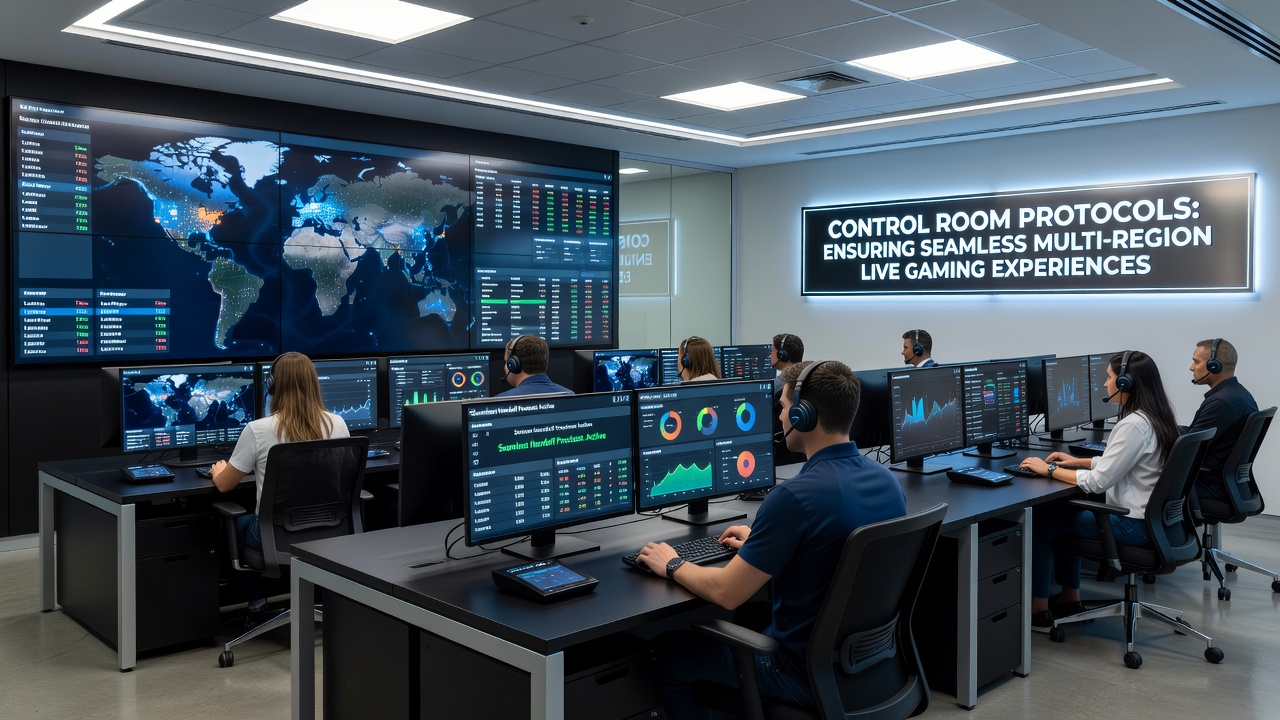
Redundancy forms the backbone of these systems. Duplicate encoder banks, secondary power supplies, and mirrored databases sit ready for instant activation. Protocols require regular drills that simulate regional outages so staff maintain muscle memory for real events. According to findings published by the European Gaming and Amusement Federation, facilities conducting quarterly simulations experience 30 percent fewer unplanned downtime incidents over a twelve-month cycle.
Data Security and Regional Compliance Integration
Encryption protocols wrap every video and data packet traveling between regions, with keys rotated according to schedules that satisfy the strictest participating jurisdiction. Access logs feed into centralized systems that generate compliance reports automatically for audits. Operators coordinate with research institutions studying data flow patterns to refine these measures, incorporating insights from academic papers on distributed network security.
Staff training emphasizes both technical proficiency and regulatory awareness. New hires study jurisdiction-specific rules through modules that update whenever authorities revise guidelines. This ongoing education ensures that decisions made during live incidents align with all applicable frameworks without requiring separate approval chains for each region.
Conclusion
Control room protocols continue to evolve alongside network infrastructure and regulatory landscapes. The combination of automated monitoring, human oversight, and redundant systems enables consistent delivery of live gaming across continents. As operators prepare for the November 2026 enhancements, the focus remains on maintaining seamless connections that meet both technical benchmarks and regional requirements through coordinated, evidence-based practices.